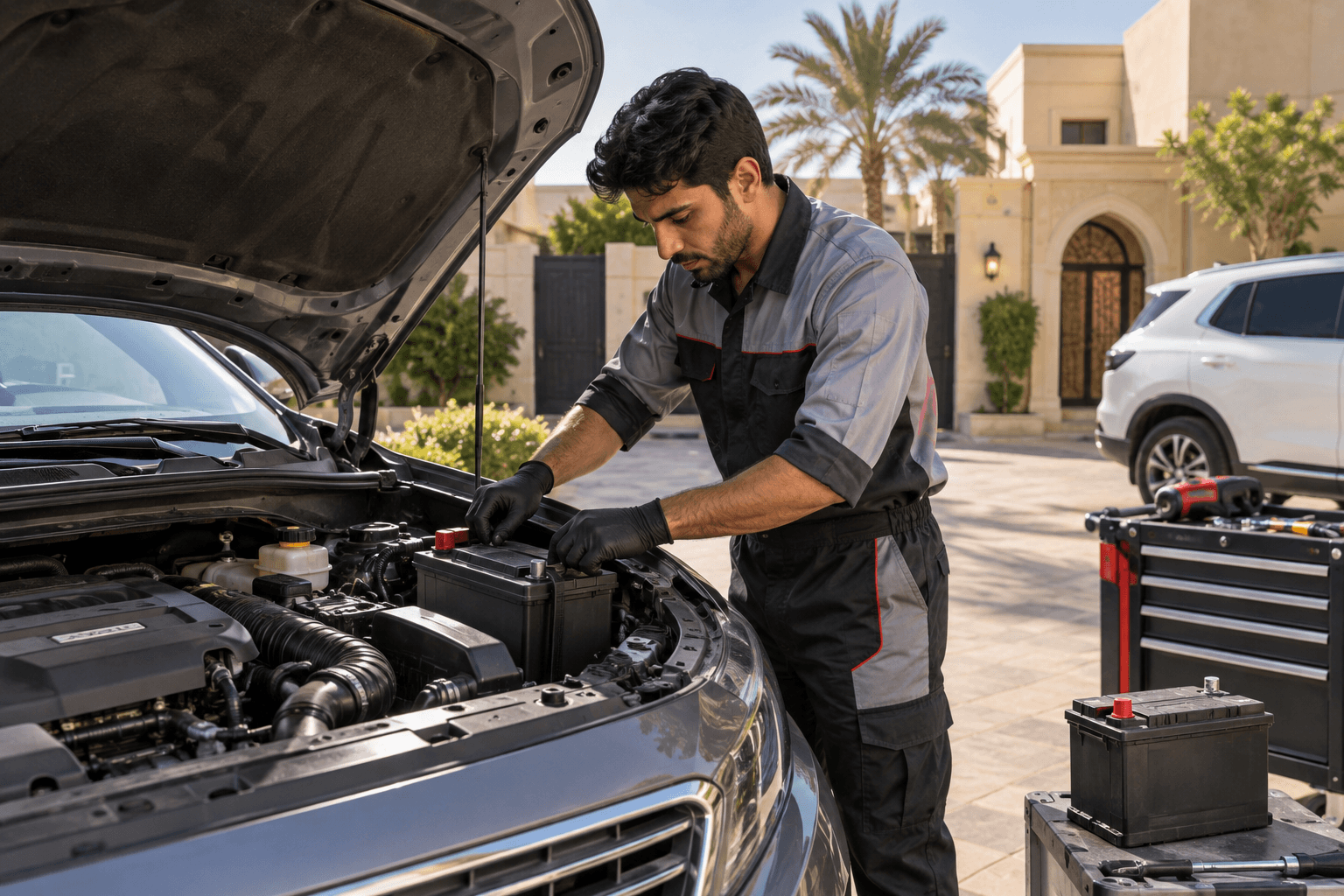


أفضل أجهزة شحن بطارية السيارة المنزلية: كيف تختار الجهاز المناسب
يُعد جهاز شحن بطارية السيارة من الأدوات الأساسية التي يحتاجها كل سائق في المملكة العربية السعودية، نظراً للظروف المناخية القاسية التي تؤثر مباشرة على أداء البطاريات وعمرها الافتراضي. سواء كنت تواجه مشكلة في بدء تشغيل المحرك بسبب تفريغ البطارية، أو ترغب في صيانة وقائية لسيارتك خلال فترات التوقف الطويلة، فإن اختيار جهاز الشحن المناسب يُحدث فرقاً كبيراً في أداء سيارتك وتكلفة الصيانة الإجمالية.

Products You May Like






A car battery charger is one of the essential tools that every driver in the Kingdom of Saudi Arabia needs, given the harsh climatic conditions that directly affect the performance and lifespan of car batteries. Whether you are facing an engine starting problem due to a discharged car battery, or you want to perform preventive maintenance on your vehicle during long parking periods, choosing the right charger makes a big difference in your car's performance and overall maintenance cost.
This professional guide aims to provide accurate technical information about the types of car battery chargers, selection criteria, and best practices for safe charging, while highlighting the role of Kafarat Plus as an integrated solution for mobile maintenance services in Saudi Arabia.
Table of Contents
- The Importance of a Car Battery Charger
- How a Car Battery Charger Works
- Types of Car Battery Chargers Available in the Saudi Market
- The Difference Between Conventional, Smart Chargers, and Emergency Jump Starters
- Technical Specifications of Car Battery Chargers: Voltage and Amperage
- Criteria for Choosing the Right Charger
- Types of Car Batteries Available Through Kafarat Plus
- Top Car Battery Charger Brands in Saudi Arabia
- How to Distinguish Between Original and Counterfeit Chargers
- Safe Charging Procedures for Car Batteries at Home
- Common Mistakes When Using Car Battery Chargers
- Safety Precautions When Handling Car Batteries
- The Impact of the Saudi Climate on Car Batteries and Chargers
- Prices of Car Battery Chargers in the Saudi Market
- When Is Replacement Better Than Charging?
- Kafarat Plus Car Battery Inspection and Replacement Service
- Car Battery Periodic Maintenance Schedule
- Frequently Asked Questions
1. The Importance of a Car Battery Charger
A car battery charger is an electrical device that restores the necessary electrical energy to the car battery after it has been discharged due to several factors, including:
- Leaving the car parked for long periods (two weeks or more).
- Operating electrical loads (AC, lights, audio) with the engine off.
- A weak charging system (alternator/dynamo).
- Frequent use on short trips that do not allow the car battery to charge sufficiently.
- Low temperatures in the northern regions or extreme heat in the central and eastern regions.
The charger represents a practical solution to avoid relying on jumper cables that require another car and external assistance, and it is also a preventive tool that extends the life of the car battery by maintaining an optimal charge level.
2. How a Car Battery Charger Works
A car battery charger works by converting the alternating current (AC) coming from the home power source (220 volts in Saudi Arabia) into direct current (DC) with specifications suitable for the car battery (usually 12 volts, with a controlled amperage rate).
Modern operating mechanisms include smart electronic circuits that perform the following:
- Monitoring the voltage of the car battery in real time to determine the remaining charge level.
- Automatically adjusting the current intensity: high current at the start of charging, then gradually decreasing as the car battery approaches full charge.
- Automatically stopping the charge upon completion and switching to Maintenance Mode.
- Detecting reverse polarity and preventing charging in case of incorrect connection.
- Protection against overheating via built-in thermal sensors.

3. Types of Car Battery Chargers Available in the Saudi Market
3.1 Conventional Charger (Trickle Charger / Conventional Charger)
- Provides a constant current at a low rate.
- Does not include smart control circuits.
- Requires manual monitoring to avoid overcharging.
- Suitable for simple and infrequent use.
- The least expensive among the types.
3.2 Smart Charger (Smart Charger / Automatic Charger)
- Equipped with advanced electronic control units.
- Monitors the condition of the car battery and automatically adjusts the current.
- Stops when charging is complete and switches to maintenance mode.
- Safe for home use even if forgotten.
- The most common and recommended option for personal use.
3.3 Jump Starter (Jump Starter / Portable Booster)
- A portable device with a rechargeable internal battery.
- Used only to give a strong electrical boost to start the engine.
- Does not fully charge the car battery.
- An emergency tool, not a replacement for a full charger.
- Useful on long trips and desert roads.
3.4 Battery Maintainer
- Continuously maintains the charge level of the car battery.
- Ideal for cars stored for long periods (seasonal cars, second cars).
- Operates at a very low current rate to avoid overcharging.
- Not suitable for charging a completely empty car battery.
Charger Types Comparison Table
| Type | Primary Use | Charging Time | Safety Level | Price Range (SAR) |
|---|---|---|---|---|
| Conventional Charger | Infrequent charging | 6 - 12 hours | Medium | 80 - 200 |
| Smart/Automatic Charger | Regular home use | 4 - 10 hours | High | 150 - 450 |
| Portable Jump Starter | Road emergencies | Instant (starting only) | High | 150 - 600 |
| Maintainer | Parked cars | Continuous - slow | Very high | 100 - 300 |


4. The Difference Between Conventional, Smart Chargers, and Emergency Jump Starters
4.1 Conventional Charger vs Smart Charger
| Feature | Conventional Charger | Smart Charger |
|---|---|---|
| Current Control | Constant throughout the charging period | Variable according to the car battery condition |
| Auto Stop | Not available | Available |
| Maintenance Mode | Not available | Available |
| Overcharge Protection | Not present | Present |
| Reverse Polarity Protection | May not be present | Present in modern models |
| Suitable for Beginners | No (requires experience) | Yes (automatic operation) |
4.2 Full Charger vs Emergency Jump Starter
- Full Charger: Recharges the car battery to 100%, solves the complete discharge problem, and extends the lifespan with regular use.
- Emergency Jump Starter: Gives an instant electrical boost to start the engine, does not fully charge the car battery, is only a temporary solution, and the battery must be charged later with a full charger.
Technical Recommendation: It is recommended to keep a jump starter in the car for emergencies, and a smart charger at home for periodic maintenance.
Price Distribution of Car Battery Chargers in the Saudi Market
5. Technical Specifications of Car Battery Chargers: Voltage and Amperage
5.1 Voltage
| Vehicle Type | Suitable Charger Voltage | Application |
|---|---|---|
| Modern passenger cars | 12 volts | Most common in Saudi Arabia |
| Old cars (rare) | 6 volts | Classic cars |
| Heavy trucks and buses | 24 volts | Commercial vehicles and fleets |
Warning: Using a charger with a voltage incompatible with the car battery leads to permanent damage to the car battery or the vehicle's electrical system.
5.2 Amperage
The amperage rate determines the charging speed, and the safe rate should not exceed 10% of the car battery capacity measured in ampere-hours (Ah).
Practical Example:
- Car battery with a capacity of 60 Ah.
- Maximum safe charging current = 60 × 0.10 = 6 amperes.
Charger Classifications by Amperage:
| Amperage Rate | Charging Speed | Suitable Use |
|---|---|---|
| 2 - 4 amperes | Slow | Preventive maintenance, small cars |
| 6 - 10 amperes | Medium | Most passenger cars |
| 12 - 20 amperes | Fast | Large SUVs, light trucks |
| 20+ amperes | Very fast | Professional use and fleets |
6. Criteria for Choosing the Right Charger
6.1 Technical Criteria
- Compatibility with the car battery voltage: Make sure the charger supports 12 volts for most cars.
- Appropriate amperage rate: Not exceeding 10% of the car battery capacity (Ah) for safe charging.
- Type of car battery: Some chargers support AGM and Gel batteries with special settings, which are common in modern cars.
- Integrated protection: Presence of protection against overcharging, reverse polarity, overheating, and short circuits.
- Safety standards: CE, UL, or SASO certification for electrical conformity approval.
6.2 Practical Criteria
- Ease of use: Clear interface, LED indicators for charging status.
- Connection cable length: Determines the ease of reaching the car battery in the garage.
- Size and storage: Portability and storage in the car or at home.
- Warranty: A documented warranty period and an authorized service center in Saudi Arabia.
- Price: Proportional to the specifications, and avoid suspiciously low prices.
6.3 Operational Criteria
- Frequency: A smart charger is suitable for frequent use, a conventional charger for rare use.
- Type of car: Modern cars with sensitive electronics need smart chargers with PWM (Pulse Width Modulation) technology to ensure the safety of the control units.
- Usage environment: Indoor garage (any type), outdoor exposed to dust and humidity (a sealed charger is preferred).
7. Types of Car Batteries Available Through Kafarat Plus
When you need to replace the power source in your vehicle, the Kafarat Plus app provides a wide range of original and approved car batteries suitable for various models and needs in the Saudi market. Among the most prominent brands and options available:
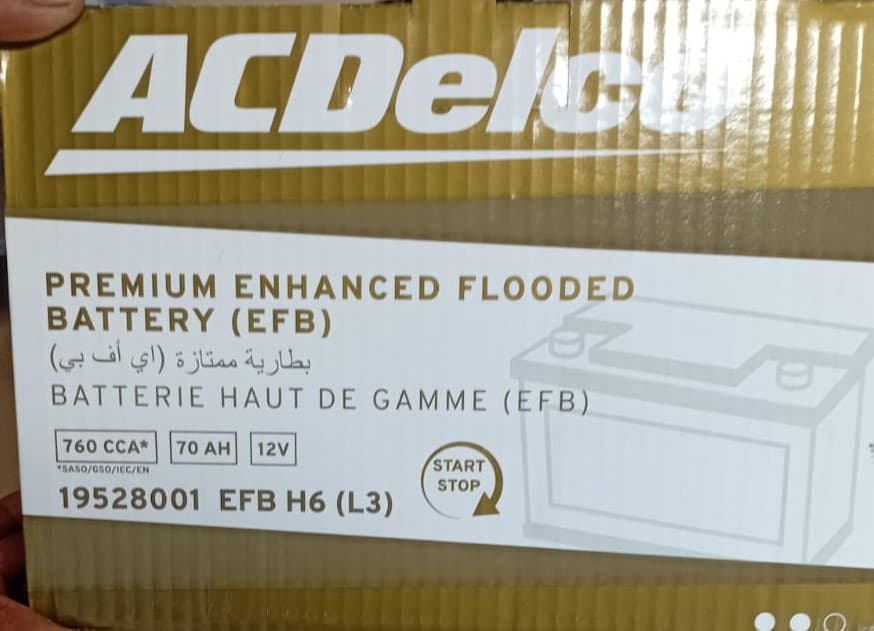
- AC Delco: Reliable options with multiple capacities (such as 70, 80, 90, 95, and 115 amperes), featuring high performance and excellent endurance to the harsh driving conditions in the Kingdom.
- Bosch: Advanced technology ensuring instant starting and a longer lifespan, with superior protection against corrosion and self-discharge.
- Duracell: Known for its endurance and efficiency in maintaining voltage stability, making it ideal for intensive daily use and modern vehicles.
You can browse all options, compare technical specifications, and request the mobile inspection and replacement service directly through the passenger car batteries section at Kafarat Plus.
8. Top Car Battery Charger Brands in Saudi Arabia
8.1 International Electronics Brands
| Brand | Key Features | Price Category |
|---|---|---|
| Anker | Multiple protection technologies, compact design, trusted reputation | Medium - High |
| Baseus | Small size, easy portability, additional ports (USB) | Medium |
| Xiaomi | Competitive price, smart technologies, wide compatibility | Economy - Medium |
8.2 Brands Specialized in Car Batteries
| Brand | Key Features | Price Category |
|---|---|---|
| Bosch | German quality, advanced technology, high reliability | High |
| Varta | Long experience in car battery systems, European technology | High |
| CTEK | Specialized in smart chargers, professional technology | Very high |
8.3 Local and Regional Brands
| Brand | Key Features | Price Category |
|---|---|---|
| Saco | Widely available, economical option | Economy |
| Local Market Varieties | Low prices, high availability | Economy |
Technical Advice: When choosing a brand, it is preferable to focus on technical specifications, safety certifications, and authorized warranty in Saudi Arabia rather than just the trade name.
9. How to Distinguish Between Original and Counterfeit Chargers
Comparison of Car Battery Charger Types
With the spread of counterfeit products in the Saudi market, the following criteria should be followed to verify the authenticity of the device:
| Verification Criterion | Original Charger | Counterfeit Charger |
|---|---|---|
| Weight | Relatively heavy (good components) | Light (poor components) |
| Manufacturing Quality | Durable materials, clear printing, tight connections | Cheap materials, unclear printing |
| Safety Certifications | Clear CE, UL, SASO labels | Forged or missing labels |
| Warranty | Documented warranty card, activation code | No real warranty |
| Price | Proportional to the market average | Much lower than the normal rate |
| Source of Purchase | Authorized stores and platforms | Random ads, untrusted sellers |
10. Safe Charging Procedures for Car Batteries at Home
10.1 Initial Preparations
- Turn off the engine and remove the key from the ignition.
- Turn off all electrical loads (lights, AC, audio).
- Open the hood and ensure the place is ventilated.
- Wear gloves and protective glasses.
- Visually inspect the car battery for leaks, swelling, or terminal corrosion.
10.2 Connection Process (for a 12-Volt Charger)
- First connect the positive cable (red +) to the positive terminal of the car battery.
- Connect the negative cable (black -) to an unpainted metal grounding point on the car body (not directly to the negative terminal if possible).
- Make sure the connections are secure.
- Select the correct voltage setting (12 volts).
- Set the appropriate amperage rate (not exceeding 10% of the car battery capacity).
- Turn on the charger.
10.3 During Charging
- Monitor the device indicators to ensure the process is proceeding normally.
- Make sure the car battery or charger does not heat up abnormally.
- Check for the absence of sulfur smell or abnormal gases.
- Let the device operate until charging is complete (wait for the auto-stop signal).
10.4 After Charging Is Complete
- Turn off the charger and unplug it from the power source.
- Disconnect the negative cable first (-).
- Disconnect the positive cable second (+).
- Check the charge level using a voltage meter to verify (12.6 - 12.8 volts for a fully charged car battery).
11. Common Mistakes When Using Car Battery Chargers
11.1 Technical Mistakes
- Using a charger with an inappropriate voltage (12 volts for a 24-volt car battery or vice versa).
- Choosing a very high amperage rate leading to overheating and damage of the car battery.
- Connecting the terminals in reverse (positive to negative).
- Leaving the charger operating for days on conventional (non-smart) devices.
- Charging a visibly damaged car battery (swelling, leakage).
11.2 Practical Mistakes
- Charging in a closed place without ventilation (gas hazard).
- Neglecting to clean the terminals before connection.
- Ignoring monitoring the indicators during charging.
- Relying on the emergency jump starter as a permanent alternative to the full charger.
- Charging the car battery while it is very hot (immediately after running the car).

12. Safety Precautions When Handling Car Batteries
12.1 Personal Precautions
- Wear acid-resistant glasses and gloves.
- Avoid smoking or using flame sources near the car battery.
- Do not touch the metal terminals with bare hands.
- Wash hands well after handling the car battery.
- Make sure hands and the work area are dry.
12.2 Technical Precautions
- Ensure the place is well ventilated.
- Keep flammable materials away from the work area.
- Do not connect or disconnect cables while the charger is operating.
- Do not use damaged or exposed cables.
- Refer to the car manual to know the safe grounding location in modern cars.
12.3 Danger Signs
- Strong sulfur smell: May indicate gas leakage, stop charging immediately.
- Abnormal heat: May indicate a fault in the car battery or charger.
- Swelling in the car battery body: Evidence of internal damage, replacement is required.
- Electrical sparks: Evidence of incorrect connection or short circuit, stop immediately.
13. The Impact of the Saudi Climate on Car Batteries and Chargers
13.1 High Temperatures (Riyadh, Jeddah, Dammam, Khobar, Ahsa)
- Negative impact on car batteries: Accelerated evaporation of the internal fluid, increased chemical corrosion, and shortening of the lifespan by up to 30-50% compared to moderate climates.
- Negative impact on chargers: The heat of the charger itself may affect the efficiency of the electronic circuits if stored or used in direct sunlight.
13.2 Extreme Cold (Abha, Tabuk, Hail, Qassim at night)
- Negative impact on car batteries: Increased demand for current during cold starting, which quickly reveals the weakness of the car battery.
- Impact on charging: The rate at which the car battery accepts charging slows down in cold weather.
13.3 High Humidity (Jeddah, Khobar, Dammam, Ahsa in summer)
- Negative impact: Accelerated corrosion of metal terminals, increased probability of surface electrical leaks.
Recommendations for Dealing with the Saudi Climate:
- Store chargers in a dry, moderate-temperature place.
- Inspect the car battery periodically (every 3-4 months) in hot regions.
- Use chargers with advanced thermal protection.
- Clean the car battery terminals frequently in humid regions.
14. Prices of Car Battery Chargers in the Saudi Market
Approximate Price Table (Saudi Riyal)
| Type | Economy Category | Medium Category | High Category |
|---|---|---|---|
| Conventional Charger | 80 - 120 | 120 - 180 | - |
| Smart Charger 2-6 Amperes | 150 - 250 | 250 - 350 | 350 - 500 |
| Smart Charger 10-20 Amperes | 250 - 400 | 400 - 600 | 600 - 900 |
| Portable Jump Starter | 150 - 250 | 250 - 450 | 450 - 700 |
| Maintainer | 100 - 180 | 180 - 280 | 280 - 450 |
Note: Prices are approximate and depend on the place of purchase, promotional offers, and currency differences. It is recommended to compare technical specifications, not just the price.
Price Distribution of Car Battery Chargers in the Saudi Market
15. When Is Replacement Better Than Charging?
15.1 Indicators of the Need for Replacement
| Indicator | Details |
|---|---|
| Car battery age | Exceeding 3-4 years (in the Saudi climate). |
| Rapid loss of charge | The car battery discharges within one or two days after a full charge. |
| Swelling or leakage | Presence of deformation in the car battery body or leaked fluid. |
| Repeated sulfur smell | During charging or starting. |
| Difficulty starting | Even after a full charge. |
| Low voltage reading | Less than 12.4 volts after full charge and rest. |
15.2 Professional Inspection of the Car Battery
The professional inspection includes:
- Voltage measurement (Voltage Test).
- Load Test to measure performance under actual demand.
- Internal Resistance measurement.
- Inspection of the car's charging system (Alternator Test).
Note: If the inspection shows that the car battery has lost more than 40% of its original capacity or that the internal resistance is high, replacement is the optimal decision economically and safety-wise.
16. Kafarat Plus Car Battery Inspection and Replacement Service
16.1 Service Overview
Kafarat Plus provides an integrated solution for car battery services in the Kingdom of Saudi Arabia, including:
- Comprehensive field inspection: By specialized technicians using professional inspection devices (voltage test, load test, internal resistance).
- Instant replacement: With original approved car batteries from international brands (suitable for various types of cars).
- Mobile service: Reaches home, office, or breakdown location.
- Wide coverage: Includes Riyadh, Jeddah, Dammam, Khobar, and other cities.
- Flexible payment options: Suitable for various budgets.
- Fleet solutions: A specialized service for managing vehicle fleet batteries periodically and in an organized manner.
16.2 Advantages of the Service Compared to Self-Purchase and Installation
| Factor | Self-Purchase and Installation | Kafarat Plus Service |
|---|---|---|
| Diagnostic accuracy | Depends on user experience | Specialized technician with professional devices |
| Car battery quality | Possibility of buying counterfeit | Guarantee of original and approved products |
| Time and effort | Requires time for searching, buying, and installing | Fast on-site service |
| Safety | Possibility of connection errors | Safe and professional installation |
| Warranty | May be limited or undocumented | Authorized warranty |
| Total cost | May appear lower but with higher risks | Value for an integrated service |
16.3 Cases Suitable for Using the Service
- When a suitable home charger is not available.
- When there is no confidence in self-maintenance capabilities.
- When a professional inspection is needed before making a replacement decision.
- When there is more than one car in the family or fleet.
- In emergencies on the road.
- For modern cars with sensitive electronic systems.
17. Car Battery Periodic Maintenance Schedule
| Procedure | Frequency | Required Tools | Purpose |
|---|---|---|---|
| Visual inspection of terminals and body | Monthly | - | Detection of leaks, corrosion, swelling |
| Cleaning terminals from corrosion | Every 3 months | Wire brush, water and baking soda | Improving electrical connection |
| Measuring car battery voltage (no load) | Every 3 months | Digital voltage meter | Ensuring normal charge level (12.6 - 12.8 volts) |
| Measuring voltage under load | Every 6 months | Professional load tester | Evaluating the actual performance of the car battery |
| Inspecting the charging system (alternator) | Every 6 months | Specialized technician | Ensuring the car battery charges while running |
| Preventive maintenance charging (for cars not used daily) | Every two weeks | Smart charger or maintainer | Maintaining optimal charge level |
| Replacing the car battery | Every 2-4 years | Specialized technician | Replacing the car battery before the end of its lifespan |
18. Frequently Asked Questions
What is the difference between a charger and an emergency jump starter?
The charger fully recharges the car battery via a home power source, while the emergency jump starter gives only a strong instant boost to start the engine without fully charging the car battery.
How long does it take to charge a completely empty car battery?
It depends on the car battery capacity and the amperage rate of the charger. The general average ranges between 4 and 12 hours for safe and complete charging, and it is preferable to use smart chargers that stop automatically when full.
Can the car battery be charged while installed in the car?
Yes, in most cases, provided that the engine and all electrical loads are turned off, and the car battery terminals are disconnected if recommended by the car manual, and the recommended safety procedures are strictly followed.
What is the appropriate amperage for charging my car battery?
The safe technical rule: the charging current should not exceed 10% of the car battery capacity in ampere-hours (Ah). Example: for a car battery with a capacity of 60 Ah, the maximum safe charging current is 6 amperes.
What is the best brand for car battery chargers?
It depends on the budget and required specifications. International brands such as Bosch, Varta, and CTEK offer high quality and reliability, while brands like Anker and Baseus offer practical and portable options at medium prices.
How do I know that my car battery needs replacement and not just charging?
If it discharges quickly within 1-2 days after a full charge, or shows swelling or fluid leakage, or has exceeded its expected lifespan of 3-4 years, these are strong indicators of the need for immediate replacement.
Does the high heat in Saudi Arabia affect the charger?
Yes, very high temperatures can affect the efficiency of the electronic circuits and reduce the lifespan of the device if exposed to direct sunlight for a long time. It is preferable to store and use it in a moderate-temperature and dry place.
Can a car charger be used to charge a motorcycle battery?
Some modern chargers support multiple settings for small batteries (such as 6V or 12V with low capacity), but the device manual must be checked for compatibility, and using a current higher than recommended should be avoided to prevent damage.
What is the cost of replacing the car battery from Kafarat Plus?
The cost varies depending on the type of car battery, brand, and vehicle model. You can get an accurate and transparent quote instantly by visiting the website or using the app to request the service.
Does Kafarat Plus offer a free car battery inspection service?
Yes, Kafarat Plus provides professional inspection services for the car battery and electrical system as a basic part of its mobile service package, and details can be inquired about and appointments booked through official communication channels or the app.
What is the difference between a smart car battery charger and a conventional charger?
The smart charger automatically monitors the condition of the car battery, adjusts the charging current, and stops completely when full to prevent overcharging. The conventional charger keeps pumping current, which may harm the car battery in the long run.
What are the basic safety precautions when charging a car battery?
Wear gloves and protective glasses, ensure the place is well ventilated to avoid hydrogen gas accumulation, disconnect the black (negative) cable first when removing, and the red (positive) cable first when installing, and avoid creating any sparks near the car battery.
Can a completely 'dead' car battery (0 volts) be recharged?
Often, completely dead car batteries do not accept charging via ordinary chargers due to the activation of the internal protection circuit. A smart charger with 'Repair Mode' may be needed, or the car battery may need to be replaced if its internal cells are permanently damaged.
How often is it recommended to inspect the car battery condition?
It is recommended to inspect the car battery at least every 6 months, especially before entering summer or winter in Saudi Arabia, as extreme temperatures directly and negatively affect the efficiency and lifespan of the car battery.
Does forgetting the car lights on discharge the car battery, and is charging enough to solve the problem?
Yes, forgetting the lights discharges the car battery quickly. If the car battery is relatively new, fully charging it may restore its efficiency. However, if this case repeats, the lifespan may be affected and it may need inspection or replacement.
What warranties are provided on car batteries from Kafarat Plus?
Kafarat Plus provides an official agent warranty on all car batteries it offers. The warranty period varies depending on the brand and type of car battery, with instant replacement service provided in case of any manufacturing defect during the warranty period.
Can an emergency jump starter be used safely in the rain?
It is not recommended at all. Although some advanced devices have moisture resistance ratings, using electronic devices with the car battery in rainy weather significantly increases the risk of electric shock or device damage.
How do I maintain my car battery during long travel periods or non-use?
It is preferable to disconnect the negative terminal of the car battery, or use a smart 'Trickle Charger' that maintains the optimal charge level without excess, ensuring that the car battery is ready to work immediately upon returning from travel.
Does Kafarat Plus provide a mobile car battery replacement service?
Yes, Kafarat Plus provides a mobile car battery replacement service that reaches you directly at home, at work, or even on the road, with a comprehensive inspection of the electrical system to ensure that the problem is limited to the car battery only.
What should I do if the car battery terminals are corroded or have a white layer before charging?
The terminals must first be cleaned using a wire brush and a safe solution (such as water and baking soda), then dried well before connecting the charger. This ensures efficient and safe current flow and prevents overheating at the connection points.