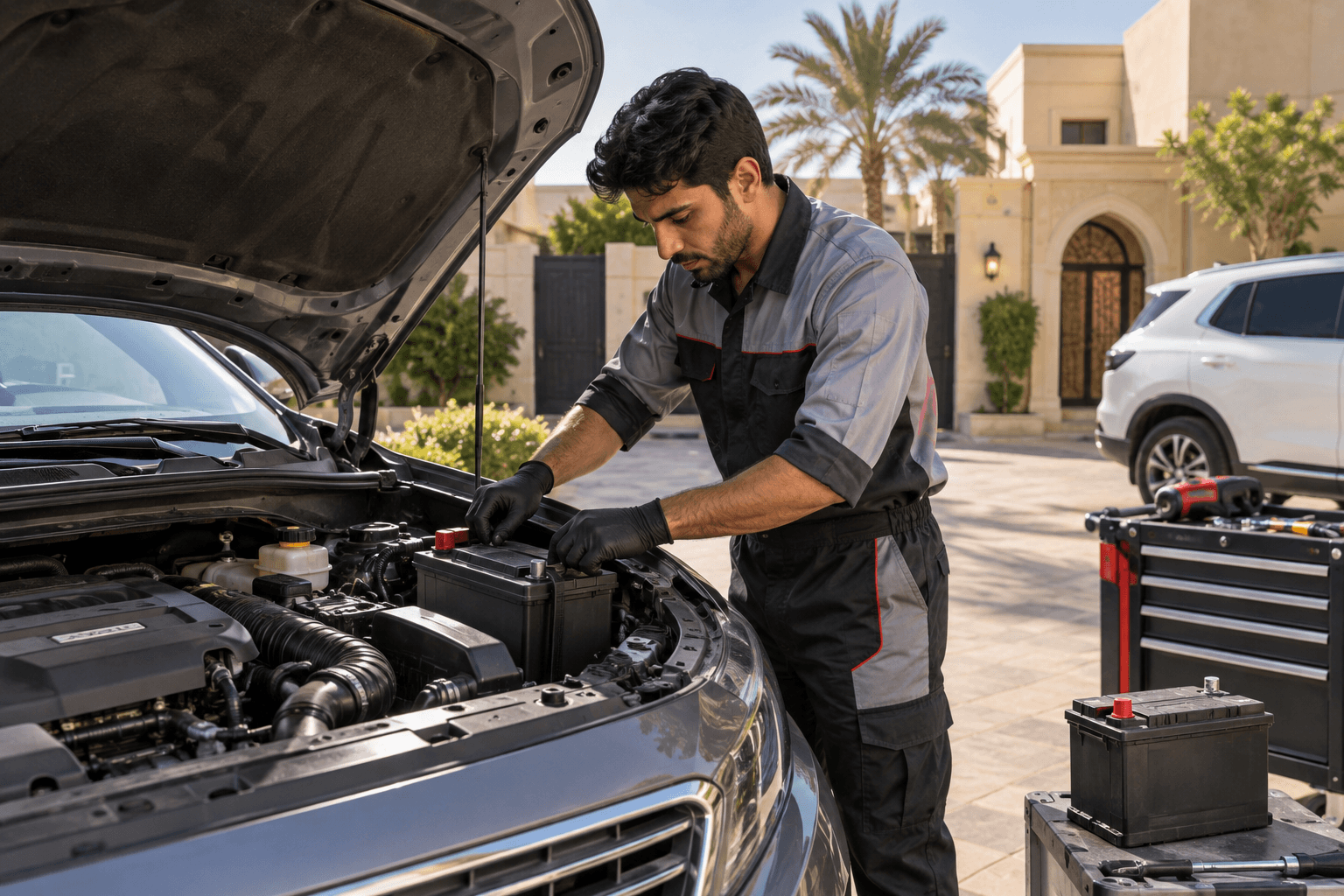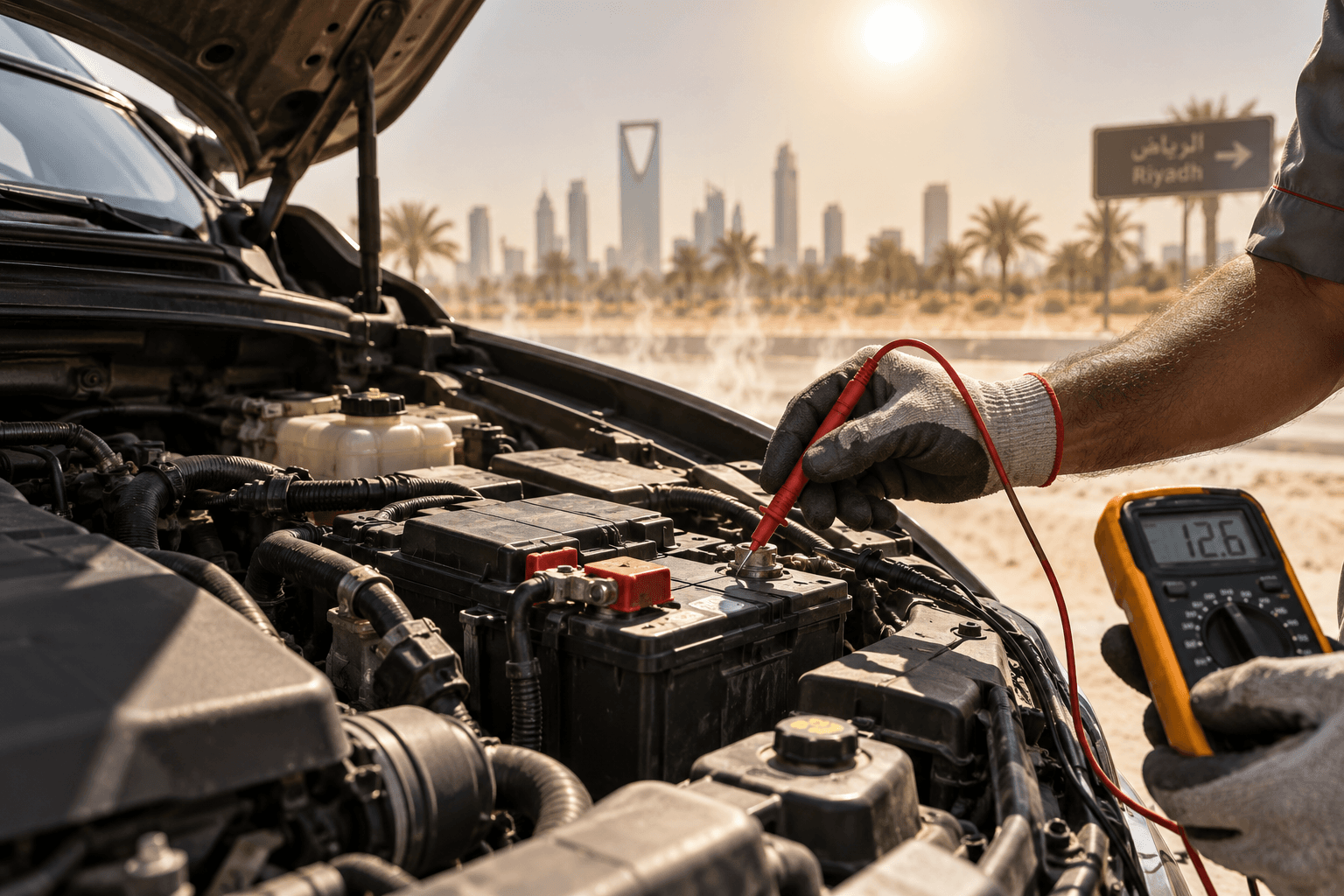


Prepare Your Car for a Safe Road Trip: Tire & Battery Checklist Before Travel
A practical and comprehensive guide explaining step by step how to check your tires and battery before any road trip in Saudi Arabia, with ready-to-use checklists, informative tables, and common mistakes many drivers make before the travel and holiday season.

As the vacation and travel season approaches, whether it's a family trip to another city, a desert road trip to rest stops, or even a short intercity visit, many drivers in Saudi Arabia overlook a simple step that could determine the difference between a safe, comfortable journey and one full of unpleasant surprises on the road: checking tires and battery before travel.
Tires and the battery are among the most common car components prone to sudden breakdowns during long trips, for a simple reason: both are directly affected by rising temperatures, long driving hours, and constant speed on highways—conditions that frequently occur on Saudi road trips between cities or toward rest stops and desert camps.
In this guide, we'll take you step-by-step through a practical and comprehensive checklist for tires and battery, with explanations of the reasons and warning signs to watch for, plus illustrative tables to help you make the right decision, whether you're planning a short weekend trip or a long journey across multiple regions of the Kingdom.
Quick Answer
Checking tires and battery before travel primarily includes checking tire air pressure (including the spare tire), tread depth (should not be less than 1.6 mm), tire manufacturing date (preferably not exceeding 5-6 years of actual use), and ensuring there are no cracks or bulges in the sidewall. In parallel, you should check battery age (typically between 2 and 4 years depending on usage and temperature), ensure terminal cleanliness from corrosion, and perform a voltage and charging test if it's over two years old. These two simple checks significantly reduce the likelihood of sudden breakdowns, especially on long desert roads far from cities.
Table of Contents
- Why is checking tires and battery before travel the most important step in your road trip?
- Key Main Points
- First Step in Checking Tires and Battery Before Travel: Complete Tire Inspection Checklist
- Second Step in Checking Tires and Battery Before Travel: Battery Inspection Checklist
- Comprehensive Vehicle Pre-Travel Inspection Checklist (Overview)
- Preparing Your Vehicle According to Trip Nature and Climate
- Practical Guide: How to Complete Tire and Battery Check Before Travel Yourself in 10 Minutes
- Common Mistakes When Checking Tires and Battery Before Travel
- Expert Tips for Checking Tires and Battery Before Travel Accurately
- Periodic Maintenance Schedule Related to Travel Season
- Factors Affecting the Cost of Checking Tires and Battery Before Travel
- Where to Get Tire and Battery Check Service Before Travel in Saudi Arabia?
- Conclusion
- Frequently Asked Questions
Key Main Points
- Checking tires and battery before travel is the most important preventive measure that reduces the likelihood of sudden breakdowns during road trips in Saudi Arabia.
- Proper air pressure should be checked when the car is "cold," meaning before driving or after stopping for at least two hours.
- Safe tire tread depth should not be less than 1.6 mm, and preferably not less than 3 mm before a long trip to ensure better grip, especially in case of sudden rainfall.
- The expected battery lifespan in Saudi Arabia's hot climate is often shorter than the global average due to the direct impact of high temperatures on charging efficiency.
- The spare tire is often forgotten during inspection, even though it's the last line of defense in case of a puncture on a road far from cities.
- Today, you can complete checking tires and battery before travel entirely through a mobile installation service without needing to go to a service center.

Why is checking tires and battery before travel the most important step in your road trip?
When planning a road trip, many drivers tend to focus on the route, stopping points, and fuel, while tires and battery remain low on the priority list despite being the two elements most related to actual road safety.
Tires are the only point of contact between the car and the road, and any defect in them—whether low pressure, uneven wear, or aging of the rubber—directly affects braking distance, cornering control, and vehicle stability at high speeds that frequently occur on highways between Saudi cities.
The battery, on the other hand, is responsible for starting the car and powering all electrical systems including the air conditioner, lighting, and navigation systems—systems that drivers rely on heavily during long trips, especially in summer when the AC runs at full capacity for continuous hours.
What both have in common is that their failures usually don't happen suddenly without warning; there are early signs that can be detected with a simple inspection that takes no more than 10 to 15 minutes, which we'll explain in detail in the coming sections.
First Step in Checking Tires and Battery Before Travel: Complete Tire Inspection Checklist
Follow this checklist before any road trip, preferably implementing it one to two days before your travel date to allow sufficient time for any repairs or replacements if needed:
- Check air pressure in all four tires and the spare tire, matching it to the manufacturer's recommended pressure (usually found on a sticker inside the driver's door).
- Check tread depth using a coin or a dedicated depth gauge, and ensure there are no uneven wear areas indicating a wheel alignment issue.
- Check the sidewall for any surface cracks or bulges, which are danger signs that should never be ignored before a long trip.
- Verify the tire manufacturing date (the 4-digit number on the sidewall), as an old tire may look fine externally but has lost some of its internal flexibility.
- Ensure the spare tire condition and inflate it, as many drivers only discover it's flat when actually needed in a remote location.
- Check tire balancing if there are steering wheel vibrations at high speeds.
- Ensure no foreign objects are embedded in the tread such as nails or large gravel that could cause slow leaks during the trip.
Recommended Air Pressure Table by Vehicle Type (Guideline)
The following numbers are approximate and for general guidance only; the exact number is always found on the driver's door sticker or the vehicle owner's manual, and may differ between fully loaded and empty vehicles.
| Vehicle Type | Approximate Pressure (PSI) for Front Axle | Notes |
|---|---|---|
| Economy Sedan | 30 – 33 | Prefer the higher end of the range for long loaded trips |
| Mid-size Family Sedan | 32 – 35 | Check for pressure differences between front and rear if present |
| Mid-size SUV | 33 – 38 | Recommended pressure increases with load and passengers |
| Pickup / Large SUV | 35 – 42 | Differs significantly between empty and full load |
Recommended Tire Pressure for Vehicles (PSI)
Table of Signs Indicating the Need to Replace Tire Before Travel
| Sign | Possible Cause | Recommended Action |
|---|---|---|
| Tread depth less than 1.6 mm | Advanced natural wear | Immediate replacement before travel |
| Cracks on sidewall | Rubber aging or excessive sun exposure | Immediate inspection by specialist, replace if needed |
| Bulge (bubble) on surface | Previous impact affected internal structure | Immediate replacement, high blowout risk |
| Uneven wear on one side | Wheel alignment issue | Align wheels + monitor new tire |
| Steering wheel vibration at speed | Balancing issue | Re-balance tires before trip |
Second Step in Checking Tires and Battery Before Travel: Battery Inspection Checklist
After completing the first step, comes the second and final step within checking tires and battery before travel. The battery is often neglected because it doesn't show clear symptoms until the moment it actually fails, and that's often at the worst possible time, such as a remote gas station or a desert rest stop far from services. Therefore, we recommend this checklist before any trip:
- Check the actual battery age since installation date, as batteries over 3 years old need more precise inspection before travel.
- Check terminals for any white/green corrosion or wear that impedes good electrical connection.
- Ensure the battery is securely fastened in place, as constant vibration on rough roads can damage internal connections over time.
- Perform a voltage and charging test (Load Test) at a specialized center, especially if you've noticed slow engine starting recently.
- Check connection cables to ensure there's no visible damage or damaged insulation.
- Ensure alternator efficiency because a healthy battery with a weak alternator may drain quickly during a long trip that relies on AC and lighting for continuous hours.

Table of Expected Battery Lifespan and When It Needs Inspection or Replacement
| Battery Age | Expected Condition | Recommendation Before Travel |
|---|---|---|
| Less than 1 year | Excellent performance usually | Quick visual inspection sufficient |
| 1 to 2 years | Good performance with possible slight decline beginning | Simple voltage check before long trips |
| 2 to 3 years | Stage requiring more attention especially in summer | Charging and voltage test by specialist |
| More than 3 years | Higher probability of sudden failure | Serious inspection recommended and serious consideration of replacement before long trip |
Expected Car Battery Lifespan and Inspection Recommendations
Table of Battery Weakness Symptoms and Causes
| Symptom | Possible Cause |
|---|---|
| Noticeable slowness when starting engine | Weak charging or aging of internal cells |
| Dimming interior lights when starting | Low battery voltage |
| Battery warning appears on dashboard | Charging problem or weak terminal connection |
| Difficulty starting car after short stop | Electrical current leak or battery nearing end of life |
| Slight sulfur smell when opening hood | Internal battery heat rise, usually related to aging |
Comprehensive Vehicle Pre-Travel Inspection Checklist (Overview)
Although tires and battery are the focus of this guide, a completely safe road trip requires a comprehensive look at the rest of the vehicle elements. Here's a quick summary worth reviewing as well:
- Essential oils and fluids: Engine oil, coolant, brake fluid, and windshield washer fluid.
- Brake system: Check brake disc and pad thickness especially if the trip includes mountain roads.
- Air conditioning system: Ensure its efficiency before facing high temperatures on the road.
- Front and rear lights and turn signals: Essential for night driving between cities.
- Emergency tools: Warning triangle, compressor or tire repair kit, battery jumper cables, and first aid kit.
- Official documents: Driver's license, vehicle registration, and valid insurance.
This section deserves a separate detailed article, but the basic idea is that checking tires and battery before travel should be part of a broader inspection routine, not a replacement for it.


Preparing Your Vehicle According to Trip Nature and Climate
Road conditions in Saudi Arabia vary greatly depending on destination and season, and this directly reflects on priorities:
Long summer trips: High temperatures increase internal tire pressure and accelerate battery energy consumption due to complete reliance on AC, therefore additional pressure and battery checks are recommended immediately before travel, and avoid departing during peak thermal times if possible.
Trips to desert areas or secondary roads: Require relatively deeper tire tread to avoid slipping on soft sand, and doubled importance for spare tire condition given the distance of service centers from these roads.
Mountain trips (such as Al-Baha or Asir roads): Require precise brake inspection alongside tires, due to long descents and repeated turns that put more pressure on the braking system than flat roads.
Fully loaded family trips: The additional weight from passengers and luggage requires raising tire pressure to the upper limit of the manufacturer's recommended range, to avoid excessive heating resulting from overload with low pressure.
Practical Guide: How to Complete Tire and Battery Check Before Travel Yourself in 10 Minutes
If you prefer to perform checking tires and battery before travel yourself without visiting a specialist, follow these simple steps:
- Start with a quick visual tour around the car while inspecting each tire externally for obvious cracks or bulges (two minutes).
- Use an air pressure gauge on each tire including the spare, and compare the reading with the recommended number on the driver's door sticker (3 minutes).
- Check tread depth by placing a coin inside the groove; if a large part of the coin appears, this indicates the tread is approaching the minimum safe limit (two minutes).
- Open the hood and visually inspect battery terminals for any white or green deposits around the terminals (one minute).
- Start the car and note the engine response speed when starting; hesitation or noticeable slowness is an indicator worth deeper inspection by a specialist (one minute).
- Check the date of last inspection or installation for battery and tires if you have it recorded, to determine if it's time for a more comprehensive professional inspection (one minute).
If you notice any warning signs during this quick inspection, it's always best to book a professional inspection before travel rather than risking it on the road.
Common Mistakes When Checking Tires and Battery Before Travel
Among the most common mistakes drivers make when checking tires and battery before travel are:
- Ignoring spare tire inspection, and the sudden discovery of its emptiness or damage only when actually needed.
- Checking air pressure when the tire is "hot" immediately after driving, which gives an inaccurate reading.
- Relying on battery age alone without actual inspection, even though some batteries decline in efficiency early depending on usage and storage conditions.
- Postponing inspection to the travel day itself, which doesn't leave enough time to fix any problem discovered at the last minute.
- Neglecting wheel alignment inspection despite clear signs of uneven wear on tires.
- Traveling with excess load without adjusting tire pressure to match the additional weight.
Expert Tips for Checking Tires and Battery Before Travel Accurately
To ensure performing checking tires and battery before travel with the highest level of accuracy, here are the top expert tips:
- Check tires and battery two to three days before travel, not at the last minute, to allow sufficient time for any necessary repairs.
- Keep a small air pressure gauge in the car permanently, it's a cheap tool that saves you from many surprises.
- Don't rely on the battery's external appearance alone; actual voltage testing is more accurate than visual inspection alone.
- Avoid driving for long continuous hours without stopping, periodic stops give a chance to notice any change in tire performance or abnormal engine heat rise.
- If the trip is long through remote areas, take a fully healthy spare tire with you, and ensure you have changing tools in the car trunk.
- Review the date of last comprehensive vehicle maintenance, if the trip coincides with a due periodic maintenance appointment, it's preferable not to postpone it until after travel.

Periodic Maintenance Schedule Related to Travel Season
The following table helps you organize the timing of checking tires and battery before travel within your vehicle's general maintenance routine throughout the year:
| Procedure | Recommended Frequency | Why Important Before Travel |
|---|---|---|
| Check tire air pressure | Before every long trip and monthly in general | Prevents thermal explosion and improves driving stability |
| Check tread depth | Every two months, and before every long trip | Ensures safe grip especially when raining |
| Check battery voltage and charging | Every 6 months, and mandatory before long summer trip | Reduces likelihood of sudden breakdown mid-way |
| Check battery terminals and clean them | Approximately every 3 months | Maintains good electrical connection and extends battery life |
| Rotate tires | Every 8,000 – 10,000 km | Ensures even wear and extends the life of the entire set |
| Check wheel alignment | When noticing car pulling, or annually | Prevents uneven wear that harms tire performance on long trips |
Factors Affecting the Cost of Checking Tires and Battery Before Travel
The cost of checking tires before travel and battery varies according to several factors, the most prominent being:
- Current tire condition: If they're still within safe age, cost is limited to inspection only, but if they need replacement, cost increases according to size and model.
- Battery age: Batteries over 3 years old often need preventive replacement before a long trip instead of risking, which adds purchase cost to the preparation budget.
- Vehicle type: SUVs and large cars often need batteries with higher amp capacity and larger size tires, which reflects on the price.
- Inspection or purchase location: Certified centers and platforms provide greater price transparency compared to undocumented shops.
- Additional services: Such as mobile installation that saves time and effort immediately before travel, and may be added as a separate service or integrated within the purchase process.
- Installment option: Some platforms allow installment payment for tires or battery through services like Tabby and Tamara without additional interest, which eases sudden financial pressure before travel season.
Where to Get Tire and Battery Check Service Before Travel in Saudi Arabia?
Instead of spending precious time before travel moving between service centers, specialized platforms like Kafarat Plus provide a practical solution that combines tire inspection and battery inspection in one place, through:
- Mobile tire installation service that reaches your location in major cities, without needing to go to a service center immediately before travel.
- Wide selection of original tires for various sizes and vehicle types, including options dedicated for SUVs and long trips, such as Hankook tires, Pirelli tires, Farroad tires, Goodyear tires, known for their balance between price and quality.
- Original car batteries with different amp capacities suitable for all vehicle categories, available through Car Batteries section on Kafarat Plus, which makes preparing the entire vehicle one step instead of two separate visits.
- Flexible payment options via Tabby, Tamara, and Mespay, allowing installment payment for tires or battery without additional interest.
- Tire repair for simple faults that can be safely repaired, instead of complete replacement which is sometimes unnecessary.
Conclusion
Checking tires before travel and battery is not an additional luxury, but an essential step that protects your safety and the safety of those with you on the trip, and saves you from unpleasant surprises in the middle of a road far from services. It doesn't require more than a simple, organized inspection checklist: correct air pressure, safe tire tread, ready spare tire, and battery with appropriate voltage and age. With the availability of inspection and mobile installation services, and flexible installment options via Tabby and Tamara, performing checking tires and battery before travel has become easier and faster than ever, so there's no need to postpone this step until the last minute before embarking on your next road trip.
Frequently Asked Questions - Checking Tires and Battery Before Travel
When should tire air pressure be checked before travel?
Inspection is preferred at least one or two days before travel, with the tire cold (before driving or after stopping for at least two hours), to ensure accurate reading and allow time for any adjustment or repair.
What is the expected car battery lifespan in Saudi Arabia's climate?
It usually ranges between two and four years depending on battery type and usage conditions, but high temperatures may reduce this lifespan compared to more moderate climates, therefore periodic inspection is recommended especially after exceeding two years.
Should the spare tire also be changed before travel?
Yes, the spare tire is often neglected even though it may be the only line of defense in case of a puncture on a road far from services, so its pressure and general condition must be ensured before any long trip.
What's the difference between checking tires in the city and before a road trip?
Inspection before a road trip should be more detailed and include the spare tire and emergency tools, because the probability of quick access to a service center in case of a problem on a highway or desert road is much lower than inside the city.
Can you know the car battery condition without opening the hood?
Only partially; some signs like slow starting or weak interior lighting can be noticed without opening the hood, but accurate voltage and charging inspection requires a dedicated testing tool by a specialist.
Is there a difference in preparing the car between summer trips and trips in other seasons?
Yes, summer trips need greater attention to tire pressure, battery efficiency, and AC due to high temperatures, while the rest of inspection elements (brakes, oils, lights) remain important throughout the year.
Can tires and battery be checked together in one visit?
Yes, and that's actually preferred to save time, and some specialized platforms in Saudi Arabia offer a service that combines tire inspection and installation with battery inspection or replacement through one mobile installation service.
How long does it take to check tires and battery before travel?
Basic visual inspection and air pressure takes about 10 minutes as we explained in the previous section, while comprehensive professional inspection by a specialist may take 20 to 30 minutes depending on vehicle condition.
What are the most important steps for checking tires and battery before travel?
In brief: checking air pressure, tread depth, and spare tire from the tires side, and checking battery age, terminals, and charging voltage from the battery side. These two axes form the core of checking tires and battery before travel that reduces most probabilities of sudden breakdowns on the road.
How do I know if tires need to be changed?
Tires need changing when tread depth drops below 1.6 mm, cracks or bulges appear in the sidewall, abnormal steering wheel vibration, or 5 years have passed since the tire manufacturing date.
What are the things that must be checked externally in the vehicle?
All tires (including spare) must be checked, front and rear lights and signals, windshield wipers, windows and mirrors safety, external body, and license plates to ensure clarity and legality.
How long can tires be used?
Tire usage duration usually ranges between 4 to 6 years maximum from manufacturing date, or between 40,000 to 80,000 kilometers depending on tire quality, driving style, and road conditions.
How do you know the tire age?
You know the tire age through the DOT code consisting of 4 prominent digits on the sidewall, where the last two digits indicate the year of manufacture (example: 2524 means week 25 of year 2024).
Does periodic inspection scrutinize tires?
Yes, Saudi periodic inspection checks tires very carefully regarding tread depth, presence of cracks or bulges, and manufacturing date, and rejects the car immediately if tires don't comply with specifications.
Is it necessary to wash the car before periodic inspection?
It's not mandatory, but it's preferable for the car to be relatively clean to facilitate reading chassis and engine numbers, and to ensure accurate inspection of lights and glass without obstacles.
Every how many kilometers should tires be changed?
It's recommended to change tires every 40,000 to 60,000 kilometers for economy tires, and may reach 80,000 kilometers for premium tires, with continuous tread depth monitoring.
Every how many kilometers must tires be changed?
Tires must be changed when reaching an average of 50,000 km, or immediately when tread depth drops below the legally permitted limit regardless of distance traveled.
What is the expected lifespan of tires?
The expected lifespan of tires is 5 years maximum from manufacturing date in hot climate like Saudi Arabia, even if tread depth is good and long distances haven't been traveled.
When does the car fail periodic inspection?
The car fails periodic inspection if tires are damaged or their age exceeds 5 years, or tread depth is less than 1.6 mm, or there are leaks, or brake or light malfunction.
What is the method for checking car tires?
The inspection method includes: measuring air pressure with cold tire, checking tread depth with a coin or dedicated gauge, visual inspection for cracks and bulges, and verifying manufacturing date (DOT).
What are the causes of tire cracks?
Cracks result from continuous exposure to sunlight and high heat, chronic low air pressure, natural rubber aging, or using harsh chemical cleaners.
What is the expected lifespan of car battery?
The expected battery lifespan ranges between two to 4 years in Saudi Arabia's hot climate, and may decrease with intensive use of AC and electronic devices.
How do I know if the tire needs to be changed?
You know the tire needs changing when tread wear indicators appear, side cracks, abnormal vibration while driving, or exceeding the expected lifespan which is 5 years from manufacture.
What is the expected lifespan of Michelin tires?
Michelin tires are characterized by a long expected lifespan reaching 6 years or 80,000 kilometers thanks to the quality of advanced rubber compounds and high manufacturing techniques.
What is the lifespan of Chinese tires?
The lifespan of good Chinese tires ranges between 3 to 5 years or 40,000 to 60,000 kilometers, and it's a good economical option provided purchasing from reliable and certified brands.
When should I change car tires?
You should change car tires when reaching 5 years from manufacture, or when tread wears out, or any structural damage appears, and before embarking on long trips to ensure safety.
What are the signs of low tire pressure?
Signs include: noticeable decrease in tire height, car pulling to one side, difficulty in steering, increased fuel consumption, and uneven wear on tread edges.
Changing tires after how many kilometers?
Tires are usually changed after traveling 50,000 to 80,000 kilometers, depending on tire type, driving style, and road conditions, with commitment to periodic tread depth inspection.
What is the validity period of tires?
The validity period of tires is 5 years from manufacturing date maximum in hot weather, regardless of the number of kilometers traveled or how good the external appearance is.
What are the signs of wheel damage?
Wheel damage signs include: steering wheel vibration at certain speeds, car pulling to a specific side, abnormal noise from tires, or frequent loss of air pressure.
What are car tire problems?
Car tire problems include: punctures, bulges, uneven wear, side cracks, and sudden pressure loss, and they're often resulting from impacts or maintenance neglect.
What is the expected lifespan of car tires?
The expected lifespan of car tires is 5 years maximum in Saudi Arabia, with necessary periodic inspection after the third year to ensure road safety.
What's the difference between H and V in tires?
The letter H means the tire can withstand speeds up to 210 km/h, while V can withstand speeds up to 240 km/h, and you should choose the symbol that matches the car's maximum specifications.
What are the best 10 car tires?
The tire list includes: Michelin, Bridgestone, Hankook, Pirelli, Goodyear, Continental, Yokohama, Dunlop, Kumho, and Toyo, and preference differs according to budget and usage pattern.
How do I know if my tires need to be changed?
You know your tires need changing by checking tread depth (less than 1.6 mm), presence of cracks, bulges, or if 5 years have passed since their manufacturing date.
What is the best app for changing tires?
The best app for changing tires is Kafarat Plus app, because it provides 100% original tires, mobile installation service at your location, convenient installment options, and certified warranty throughout the Kingdom.
Where are Kafarat Plus service centers located?
Kafarat Plus service centers are located in major cities like Riyadh, Jeddah, Dammam, Madinah, and Khamis Mushait, in addition to the mobile installation service that reaches you wherever you are.
Where are Kafarat Plus locations?
Kafarat Plus locations and services cover most regions of Saudi Arabia, and you can verify your region's coverage accurately through the app or the official website for the mobile service.