

Types of Car Tires by Use and Vehicle Model
Types of Car Tires by Use and Vehicle Model: A Comprehensive Guide to Choosing the Ideal Tire for Your Trips in Saudi Arabia. Discover how to choose the most suitable tire for your vehicle and driving needs for unmatched safety and performance.
Types of car tires by use and vehicle model: A Comprehensive Guide to Choosing the Ideal Tire for Your Journeys in Saudi Arabia
Discover how to choose the most suitable tire for your vehicle and driving needs for unmatched safety and performance.
Tires are the backbone of any vehicle, as they are the only point of contact between the car and the road. In Saudi Arabia, where driving conditions range from extreme heat and highways to rough terrain, choosing the right tires is more than a personal preference—it is essential for safety and optimal performance. This comprehensive guide will help you understand the different types of tires, their markings, and how to choose the ideal tire for your vehicle model and driving style in the Saudi market.
3 Key Points for Choosing the Ideal Tires:
- Choose according to vehicle model and use: كل سيارة، Among the Toyota Camry tires designed for comfort to Nissan Patrol tires SUV require tires specifically designed for their weight, performance, and everyday driving environment in Saudi Arabia.
- Understand tire markings and sizes: Knowing what markings such as V، H, ZR, and how to read tire sizes such as 205/65R16) is essential for selecting the right tire for proper compatibility and maximum safety.
- Invest in quality and maintenance: Choosing brands from trusted manufacturers such as Michelin وBridgestone, together with regular maintenance such as checking tire pressure and rotating the tires, extends tire lifespan and helps ensure safer, more comfortable driving.
Why Do Tires Differ by Vehicle Model and Use?
Tires are not simply rubber circles; they are complex engineering systems designed to meet the specific requirements of each vehicle type and driving condition. These differences are based on several factors:
Vehicle Weight and Performance Requirements:
- Large, heavy vehicles such as SUVs require tires with higher load ratings and stronger construction to handle additional weight and traction forces. For example, Ford Explorer tires differ significantly from Honda Civic tires in their construction.
- Lighter sedans such as Hyundai Elantra tires focus on lower weight, fuel efficiency, and reduced road noise.
Tire and Wheel Size:
Every vehicle manufacturer recommends specific tire sizes to ensure the best performance and safety. Installing the wrong size can negatively affect the ABS braking system, speedometer accuracy, and even fuel consumption.
Driving Style and Terrain:
- If you mainly drive in the city and on paved roads, you need tires that provide quietness and comfort.
- If you enjoy adventure and off-road driving, the best off-road SUV tires will provide the stability and traction needed on sand and rocky terrain.
Understanding Tire Speed Ratings: V, H, and ZR
When you look at the sidewall of a tire, you will see a series of numbers and letters that may seem unclear, but they contain important information about the tire’s capabilities. Among the most important are the speed ratings:
- H: This rating indicates that the tire is designed for speeds of up to 210 km/h. It is common on family sedans and economy cars and is suitable for everyday use on vehicles such as Honda Civic tires.
- V: This rating indicates that the tire can handle speeds of up to 240 km/h. It is suitable for relatively higher-performance vehicles or those frequently driven on highways.
- ZR: This designation is used for very high-performance tires capable of handling speeds above 240 km/h. It is commonly found on sports and luxury vehicles designed for high speeds, including some versions of Lexus LX tires.
Understanding the difference between V and H tires is important for safety because it ensures that the selected tire matches your vehicle’s capabilities, especially for highway driving in Saudi Arabia.
Choosing the Best Tire Type for Your Vehicle Category
There is no single tire that is ideal for every vehicle. The best choice depends on your vehicle category and specific needs.
Sedans: Toyota Camry, Hyundai Elantra, Honda Civic
Sedans are among the most common vehicles in Saudi Arabia and require tires that offer comfort, quietness, and fuel efficiency.
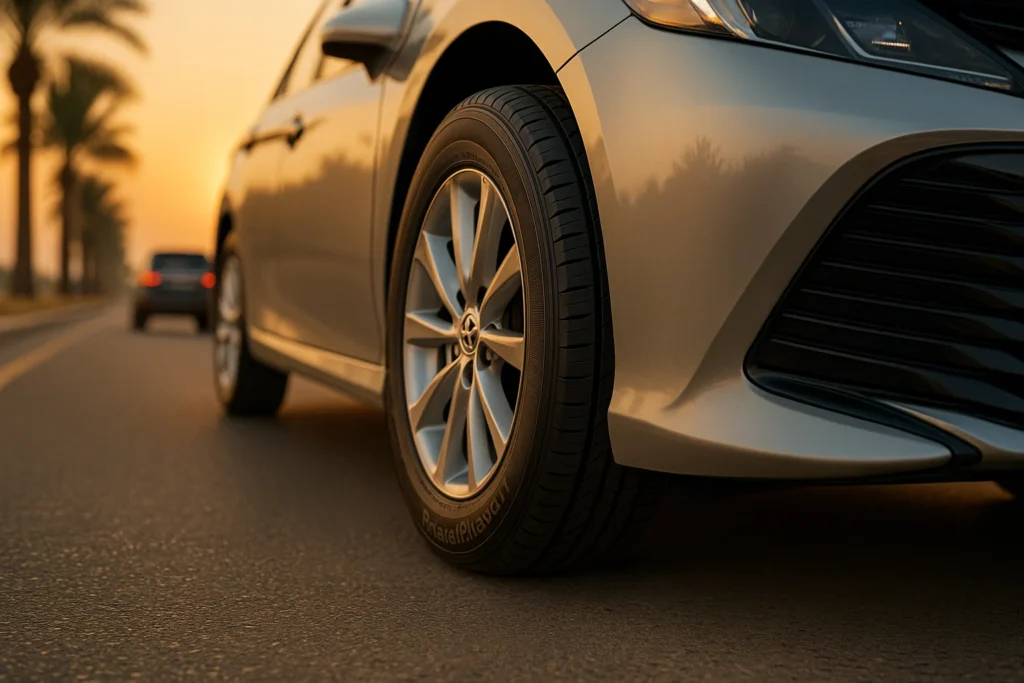
Toyota Camry Tires:
For an ideal combination of comfort and stability, Michelin Primacy or Bridgestone Turanza are excellent choices for 2024 Camry tires. These tires provide a smooth ride and reduced noise, improving the everyday driving experience.
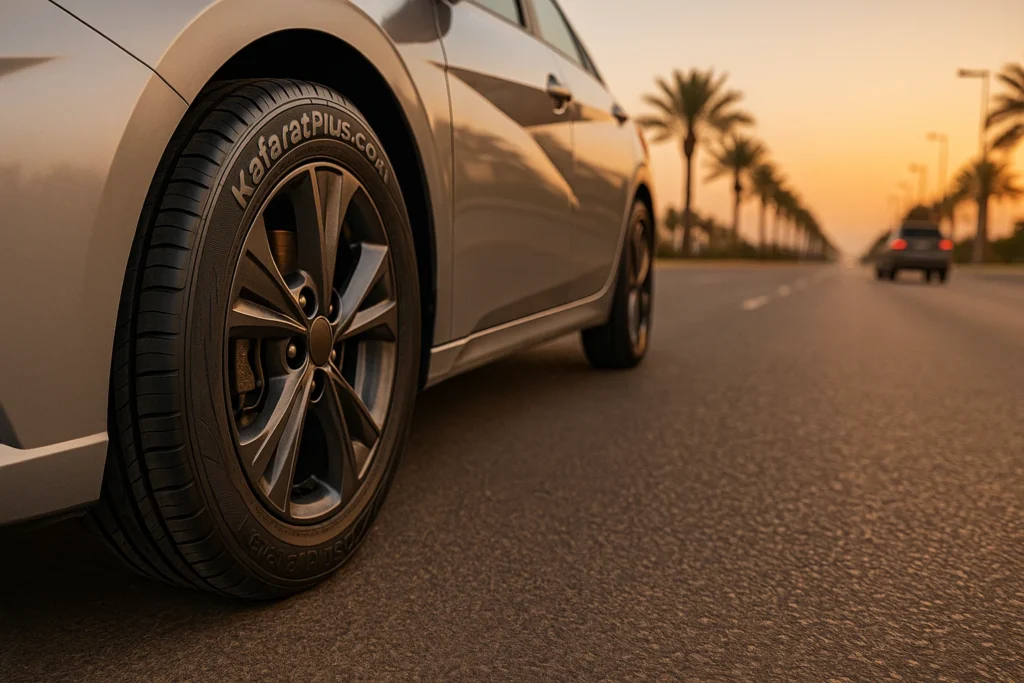
Hyundai Elantra Tires:
For Hyundai Elantra tires, look for balanced options that provide good performance at competitive prices. Brands such as Hankook or Continental offer an excellent balance between comfort and performance.
Honda Civic Tires:
Whether you want sporty performance or quiet everyday driving, Honda Civic tires benefit from tires that combine responsive handling with comfort. Goodyear offers durable and reliable options for this segment.
SUVs: Nissan Patrol, Ford Explorer, Lexus LX
SUVs require strong, reliable tires that can handle demanding conditions such as off-road terrain, desert sand, and heavy loads.
Nissan Patrol SUV Tires:
For excellent performance on sand and off-road terrain, BFGoodrich All-Terrain T/A KO2 is an excellent choice for Nissan Patrol SUV tires. Michelin Latitude/Pilot Sport SUV also offers excellent comfort and long tread life.
Ford Explorer Tires:
إطارات فورد إكسبلورر require a balance between paved-road performance and the ability to handle light off-road adventures. Bridgestone Dueler offers good options that combine durability and comfort.
Lexus LX Tires:
Lexus LX tires are designed for drivers seeking luxury and high performance. Tires such as Toyo provide excellent quietness and comfort together with high load capacity suitable for these luxury vehicles.
Sports and Luxury Cars
These vehicles require tires that deliver maximum performance, grip, and responsiveness at high speeds.
- Pirelli: Known for high-performance tires and innovative designs, Pirelli is the official Formula 1 tire supplier, reflecting its expertise for vehicles such as limousines or Mercedes vehicles.
- Continental: Offers innovative designs and high levels of safety with a strong focus on sporty performance.
- Michelin Pilot Sport: A leading choice thanks to its exceptional performance and excellent grip on both dry and wet roads.
Your Complete Guide to Tire Sizes and How to Read Them
Understanding tire sizes is essential when choosing the right tire for your vehicle. You will find a series of numbers and letters on the tire sidewall, such as 225/60 R17 95H. Here is what they mean:
| Code | Meaning | Unit |
|---|---|---|
| 225 | Tire width | Millimeters |
| 60 | Aspect ratio (sidewall height relative to width) | Percentage |
| R | Tire construction type (Radial) | Letter |
| 17 | Wheel diameter | Inches |
| 95 | Load Index | Number |
| H | Speed Rating | Letter |
You can find the recommended tire sizes for your vehicle in the owner’s manual, on the label inside the driver’s door, or sometimes in the glove compartment. When buying tires, make sure these numbers match exactly. Also check the DOT code, which indicates the production date (week and year), because choosing recently manufactured tires is important.
Advantages and Disadvantages of Different Tire Types
Each tire type has strengths and weaknesses that should be considered before choosing.
The radar chart above compares three major tire types based on important performance characteristics. Sedan tires perform best in comfort and quietness, while off-road SUV tires excel in durability and traction on difficult terrain. High-performance tires, meanwhile, prioritize sporty handling at the expense of comfort and tire lifespan.
Summer Tires:
- Advantages: Designed for driving in high temperatures and providing excellent grip on dry and wet roads. They are very suitable for Saudi Arabia’s hot climate.
- Disadvantages: Their performance drops significantly in very cold weather or on snow, which is uncommon in Saudi Arabia.
All-Season Tires:
- Advantages: Provide balanced performance across most weather conditions, from moderate temperatures to mild cold. They are a practical option for many drivers.
- Disadvantages: They may not match specialized tires in extreme conditions, whether very high heat or severe cold.
Off-Road Tires (A/T & M/T):
- Advantages: Designed to provide excellent traction on unpaved surfaces such as sand, rocks, and mud. Ideal for the best off-road SUV tires.
- Disadvantages: They can be noisy and less comfortable on paved roads and may increase fuel consumption. Their tire lifespan may also be shorter because of the demanding nature of their use.
High-Performance Tires (UHP):
- Advantages: Provide superior grip and responsiveness for sports cars.
- Disadvantages: More expensive, usually have a shorter lifespan, and may provide less comfort because of stiffer sidewalls.
Tire Prices in Saudi Arabia: Options for Different Budgets
car tire prices in Saudi Arabia vary significantly depending on brand, size, and tire type. In general, economy tires can start at around SAR 150 per tire, while premium high-performance or specialized SUV tires can exceed SAR 1,000 each.
The bar chart above presents an approximate comparison of some of the best tire brands available in the Saudi market based on quality and performance, availability, and value for money. These ratings are approximate and intended to help support an informed decision.
Among the best tire brands widely available in the Saudi market are:
- Michelin (Michelin)
- Bridgestone (Bridgestone)
- Goodyear (Goodyear)
- Continental (Continental)
- Pirelli (Pirelli)
- Hankook (Hankook)
- Dunlop (Dunlop)
- Yokohama (Yokohama)
- Falken (Falken)
These manufacturers are among the leading global brands and offer a wide range of options for different vehicles and uses. You can look for tire offers online or through specialized tire retailers.
Practical Tips for Choosing the Best Tire for Your Vehicle
To make a better purchasing decision, follow these practical tips:
For choosing the right tire: consult the owner’s manual; follow manufacturer sizes and speed/load ratings; define your driving type; consider comfort, quietness, fuel efficiency, grip, durability, and responsiveness; check the DOT production date; avoid old tires; never compromise on safety; look for better performance and longer life; read reviews of Michelin, Bridgestone, Hankook, and other brands; and consult tire specialists for precise recommendations.
This mind map summarizes the essential steps and factors to consider when choosing tires. From reviewing the owner’s manual to consulting specialists, each step supports a more informed choice that improves vehicle safety and performance.
- Always consult the owner’s manual: This is the starting point. Your owner’s manual contains the manufacturer-recommended tire sizes, speed ratings, and load ratings.
- Define your actual driving needs: Do you mainly drive in the city, travel long distances, or plan to drive off-road? The answers will help determine the most suitable tread pattern and construction.
- Check the production date (DOT): Make sure the tires are recently manufactured. The production date is shown by four digits indicating the week and year.
- Balance price and quality: Do not make price the only factor. Investing in high-quality tires means better safety, performance, and longer service life.
- Compare brands: Look for reviews and ratings of the best tire brands before buying.
- Consult specialists when needed: Qualified tire technicians can recommend suitable options based on your vehicle model and driving conditions.
Common Tire Mistakes to Avoid
Avoid these common mistakes to protect your safety and extend tire lifespan:
Watch this video to learn eight things you should know before buying new tires for your vehicle so you can make the right choice.
This video provides useful guidance on what to consider before buying new tires and emphasizes the importance of understanding tire characteristics and their impact on vehicle safety and performance.
- Ignoring tire pressure: Driving with incorrect tire pressure affects fuel consumption, tire life, and vehicle handling. Check pressure regularly.
- Driving on worn tires: When tread depth reaches the legal minimum, usually 1.6 mm, you should replace the tires immediately. Driving on worn tires is especially dangerous on wet roads.
- Skipping balancing and alignment: After installing or repairing tires, balancing and alignment should be checked to ensure smooth driving and prevent steering-wheel vibration.
- Not rotating the tires: Regular tire rotation every 8,000–10,000 km helps distribute wear evenly and extend tire lifespan.
- Buying tires unsuited to the climate: In Saudi Arabia’s high temperatures, choose tires specifically designed to withstand heat.
- Changing tire size without proper calculations: Changing tire size away from manufacturer recommendations without understanding the effects can damage suspension components, affect the speedometer, and create safety risks.
- Saving money at the expense of quality: Low-quality cheap tires may seem economical in the short term, but they can negatively affect safety, performance, and tire life.
Frequently Asked Questions (FAQ)
What is the difference between V and H tires?
What are the best car tire brands in Saudi Arabia?
How do I choose the right tire for my vehicle?
What are the best tires for sedans?
What are the best SUV tires in Saudi Arabia?
How do I read tire sizes?
Are Chinese tires a good option?
What is the typical lifespan of tires?
Which is better, Dunlop or Michelin?
What are the best tire brands for sports cars?
Conclusion: Invest in Your Safety and Vehicle Performance
- the difference between V and H tires
- Best Tires for Sedans in Saudi Arabia
- the best off-road SUV tires
- How to Choose Tires Based on Your Vehicle Model
- What Tire Sizes Mean and How to Read Them
- Best Tires for High-Performance Sports Cars
- Tire Lifespan in Saudi Arabia
- Disadvantages of Chinese Tires Compared with Japanese Tires
- Top Tire Brands Such as Michelin and Bridgestone
- How to Choose the Right Tire Using the DOT Code
Choosing the right types of car tires is no longer a luxury; it is essential for safe and comfortable driving on Saudi Arabia’s varied roads. Whether your vehicle uses Toyota Camry tires, or Hyundai Elantra tires, or Nissan Patrol SUV tires, understanding your vehicle’s requirements and the available tire options is the key to making the right decision. Good tires are an investment in your safety and the safety of those around you. Explore your options today. For a convenient shopping experience, visit Kafarat Plus to find tire offers, replace the tires, and mobile installation services that match your needs. Choose safety, performance, and the right tire for your vehicle.