

Firestone Tires Dealer in Saudi Arabia for the Right Tire Choice
Choose the best with the Firestone tires dealer offering Firestone tires at great prices and mobile installation in Riyadh, Jeddah, and Dammam for safety and quality.
Products You May Like

Firestone 245/40R19 98YSPORT
🛡️Warranty: five year

Firestone 275/45R21 110Y XL RHAWK 2
🛡️Warranty: five yearFirestone 275/35R20 102Y SPORT
🛡️Warranty: five year

Key points for choosing Firestone tires
- Firestone tire dealer: the Trading & Maintenance Company is the exclusive Firestone tires dealer in Saudi Arabia since 1953.
- Mobile fitting service: KafaratPlus offers Firestone tire sales and fitting with free mobile installation in Riyadh, Jeddah, and Dammam.
- Competitive offers: seasonal deals and discounts are available on Firestone tires through KafaratPlus, such as discounts up to 60% and “buy 2 get 2 free” promotions.
Quick overview of Firestone and the Saudi market context
Firestone was founded in 1900 in Akron, Ohio, USA by Harvey Firestone, and was one of the pioneers in mass-producing tires for passenger cars. Today, Firestone is part of a major global group in the tire industry, and its tires are manufactured in multiple factories across North America, Europe, Asia, and South America, ensuring global reach and a wide product range tailored to different market needs.
Firestone Saudi Arabia targets a broad range of vehicles, including sedans and family cars, SUVs and 4x4s, as well as light trucks and commercial tires. The brand focuses on offering comfortable touring segments, lines engineered to handle heat and harsh weather, and tires that help reduce fuel consumption through low rolling-resistance technology.
When drivers talk about genuine Firestone tires, they mean tires that carry the Firestone brand name, are new with fresh production dates, not stored for long periods or counterfeit, and backed by a clear warranty from the seller. Choosing a trusted source is therefore crucial for safety and quality.
Performance, comfort, and quality in Saudi conditions
Firestone tires are designed to suit daily use and highway driving, with some lines aimed at light off-road use. This fits well with driving conditions in the Kingdom, which combine busy cities, long-distance highway trips, and high temperatures most of the year.
City driving and daily congestion
On city streets, drivers look for tires that provide comfort over speed bumps and potholes, low noise levels inside the cabin, good response under frequent braking in traffic, and a positive impact on fuel consumption. Some of Firestone’s newer lines use a balanced tread design that combines comfort and stability with rubber compounds that help distribute pressure and reduce uneven wear.
If your usage is mainly daily commuting inside the city, choosing a touring/all-season segment from Firestone tires gives you greater comfort and lower cabin noise compared with aggressive deep-tread off-road tires.

Highways and long-distance trips
Saudi Arabia has long distances between major cities, which requires tires that offer excellent high-speed stability, confidence when changing lanes, strong grip during emergency braking, and the ability to withstand heat generated by speed and hot weather. Some Firestone lines are engineered specifically to reduce rolling resistance, which helps save fuel noticeably on long trips, especially when tire pressure is set correctly and the tires are properly balanced.
Noise level and ride comfort
Acoustic comfort is very important, especially for families. Noise levels are affected by tread design, road surface type, and air pressure. Many Firestone users prefer the quietness of touring lines compared with off-road tires, which can be louder because of their more robust tread pattern. To choose the best option, focus on touring segments and avoid increasing tire width excessively.
Grip and safety on dry and wet roads
Safety is a top priority when choosing tires. On dry roads, the key is grip in corners and vehicle stability during maneuvers and braking. On wet roads, the tire’s ability to evacuate water and prevent hydroplaning is essential, especially during heavy rain.
Global regulatory systems, such as EU regulations, rate tires based on wet grip, fuel efficiency, and external noise, and these values are shown on the tire label to help consumers make informed decisions. In the past, Firestone faced major recalls related to tread separation in some older models, which led to much stricter quality standards and more rigorous testing for later products.
Today, it is important to choose a certified tire model with good test results, verify the production date and proper storage, and maintain correct tire pressure to avoid driving at high speeds on underinflated tires.
Service life and total cost of ownership (TCO)
The lifespan of any tire depends on four main factors:
- Driving style: aggressive driving, hard braking, and hitting bumps at speed will shorten tire life.
- Air pressure: incorrect pressure (too low or too high) reduces tire life and negatively affects grip.
- Load: vehicles that are frequently overloaded or tow trailers wear out tires faster.
- Road quality and heat: rough roads and high temperatures, as in Saudi Arabia, put extra stress on tires.
Safety bodies like NHTSA recommend changing a tire when tread depth reaches 1.6 mm. In practice, many drivers replace their tires after 40–60,000 km or after 4–5 years from the production date, even if they still look fine, because rubber ages over time.
Total cost of ownership (TCO) is not just the purchase price; it also includes how many safe kilometers the tire delivers, its effect on fuel consumption, and the cost of balancing, alignment, and rotations. Firestone’s economy and mid-range lines aim to balance price, performance, and lifespan, with a strong focus on reducing fuel consumption to lower the total cost per kilometer.
This radar chart compares the main performance criteria of different Firestone tire categories, helping you choose the most suitable tire for your needs.
Prices, offers, and warranty in Saudi Arabia (updated November 2025)
Firestone prices in the Saudi market vary depending on factors such as tire size (for example Firestone 16-inch tires or Firestone 17-inch tires), category (touring, load-rated, or mild off-road), country of manufacture, and speed/load ratings. In general, Firestone tires fall into a mid-range price bracket and are available in a wide variety of popular sizes for Japanese, Korean, and European cars.
This bar chart shows indicative prices for some of the most in-demand Firestone tire sizes in Saudi Arabia, giving you a clear idea of expected costs.
To see the latest Firestone offers and seasonal discounts, you can visit the offers page on KafaratPlus. Current deals include discounts up to 60% on summer 2025 tires, “buy 2 tires get 2 free” promotions during events like White Friday 2025, and 50% off fitting services using specific promo codes. KafaratPlus also provides free mobile fitting in major cities when you buy four tires and apply an eligible discount code.
As for warranty, most providers offer coverage against manufacturing defects for a set period of time or up to a specified mileage. Always request written warranty terms, and keep your invoice and fitting date.
Which tire suits you? (sedan / SUV / commercial / fleets)
Choosing the right tire starts with understanding your vehicle type and main usage. After that, you can look at the brand and model.
1) Sedans and family cars
For small and mid-size sedans used for city driving and light highway trips, focus on Firestone touring tires that provide comfort, quietness, and a good wet-grip rating, in the same size as the factory specification.
2) SUVs and 4x4s
If your usage is 70% city and 30% light off-road, a highway or mild all-terrain tire that can also handle some unpaved roads is usually enough. For frequent desert or rough-track driving, choose a more robust off-road line that resists cuts and gravel, bearing in mind the potential increase in noise and fuel consumption.
3) Light trucks and work vehicles
For pickups or light trucks, pay close attention to the load index and the tire’s ability to carry heavy loads. It is not recommended to use passenger-car tires on a vehicle that is constantly loaded.
4) Fleets (corporate, delivery, rental)
For fleets, calculating total cost of ownership (TCO) is crucial; you should look at the cost per kilometer, not just the price per tire. Firestone offers lines targeting commercial use with compounds that combine long tread life with good fuel economy.

Practical tips for choosing (sizes / speed ratings / load / air pressure)
1) Understanding tire size
Example: 205/55R16
- 205: tire width in millimeters.
- 55: sidewall height as a percentage of the width.
- R: radial construction.
- 16: rim diameter in inches.
You should stick to the factory size as much as possible. Changing the size without proper study can affect speedometer accuracy, comfort, and fuel consumption.
2) Speed ratings
The speed rating is a letter (such as H or V) that indicates the maximum design speed the tire can handle when carrying its rated load. Each rating corresponds to specific speeds, and you should always follow the vehicle manufacturer’s recommendation. Avoid fitting a tire with a speed rating lower than required, especially if you frequently drive on highways.
3) Load index
The load index is a number before the speed rating that expresses the maximum load a tire can carry at the correct pressure. For example, a load index of 91 corresponds to about 615 kg per tire. Use official rating tables or your car’s manual to determine the minimum acceptable load index.
4) Correct pressure
Safety organizations such as NHTSA emphasize that proper tire pressure is essential for safety, grip, and tire life. To ensure correct pressure:
- Check the sticker found on the driver’s door pillar or fuel cap.
- Check tire pressure at least once a month, preferably when the tire is “cold” (has not been driven long recently).
Common mistakes and how to avoid them
Errors
Common mistakes when choosing tires Buying by brand name only Ignoring size, speed rating and load index Wrong type of saving Choosing the cheapest with no quality Ignoring balancing and alignment Fast tire wear Steering wheel vibration Not rotating the tires Uneven wear Shorter service life Relying on visual inspection only Cracks or age over 5 years Reduced safety level
This mind-map style text summarizes common mistakes drivers make when choosing tires and how to avoid them to ensure safe driving and longer tire life.
To avoid tire-related problems and risks, pay attention to these common mistakes:
- Buying based on brand name only: focusing on the Firestone name or any other brand without considering size, speed rating, and load index for your car. It is better to start with vehicle specs and then choose the right model.
- Wrong way of saving money: choosing the cheapest tires without looking at safety tests or origin, which can lead to poor performance and shorter life.
- Skipping balancing and alignment: fitting new tires without balancing and alignment can cause rapid wear and steering vibration.
- Not rotating tires: rotating tires every 10–12,000 km ensures even wear and extends tire life.
- Relying on appearance only: the tread may look fine, but the tire could be cracked or older than 5 years, which reduces the safety level.
City coverage and services near your location
KafaratPlus offers integrated solutions for buying and fitting tires, including Firestone tires, with a focus on mobile fitting in major cities. Whether you are searching for Firestone Riyadh, Firestone Jeddah, or Firestone Dammam, the goal is to bring service as close as possible to your location.
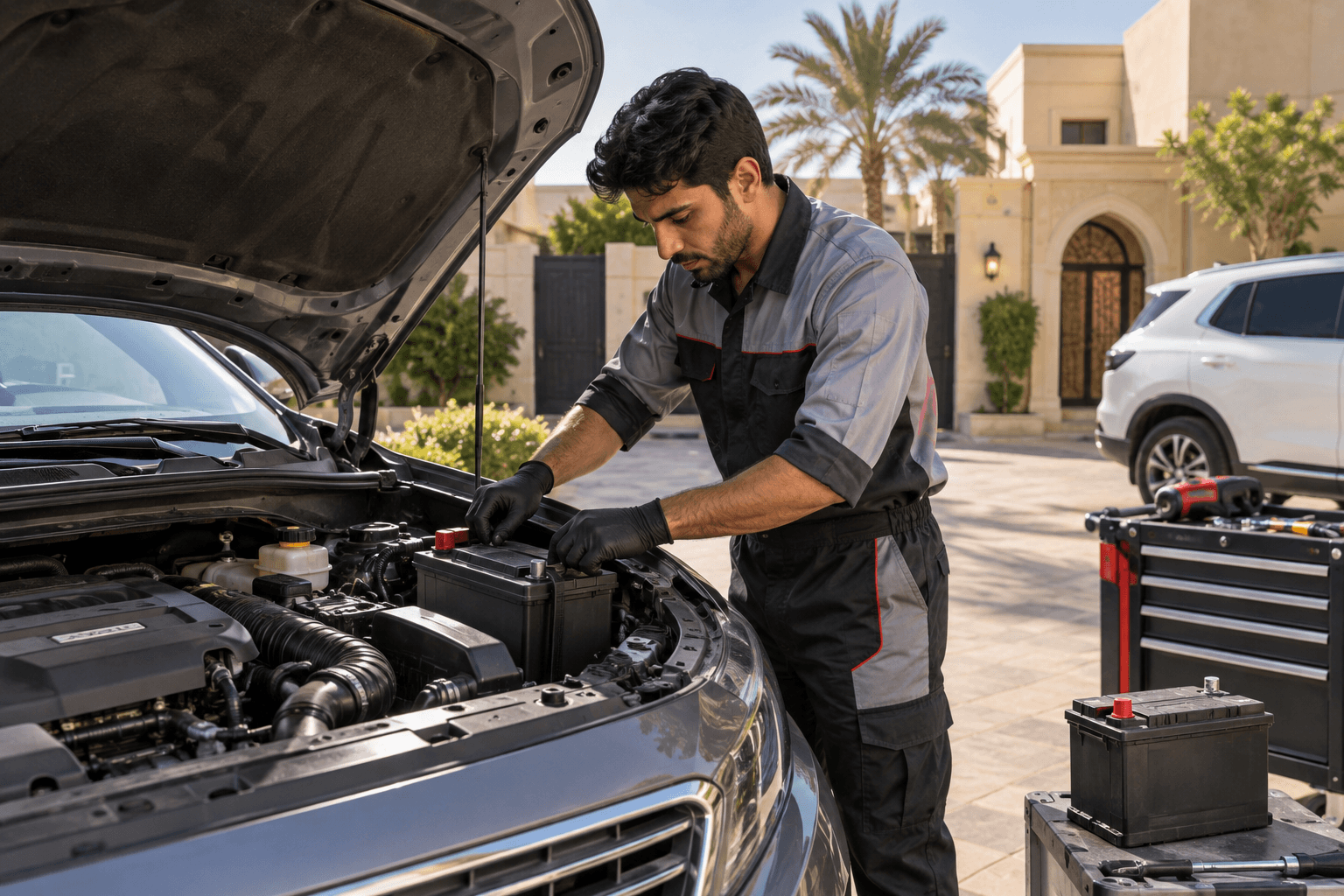
The KafaratPlus team of trained technicians can fit your tires at your home or workplace, saving you time and effort while delivering professional service that includes fitting, balancing, and checking tire pressure and tread depth.
https://www.youtube.com/embed/ersc0x3rzsU
Watch this video to see the process of fitting Firestone FS591 tires, highlighting the precision and professionalism KafaratPlus follows in its services.
This video shows the step-by-step fitting process for Firestone FS591 truck tires, including carefully lubricating the valve stems, inflating the tire, and tightening the wheel nuts with a torque wrench. It highlights the high level of precision and professionalism required when fitting tires—exactly the standard KafaratPlus aims to deliver through its mobile fitting service, to ensure maximum safety and performance.
Indicative city coverage table for KafaratPlus
| City | Approximate response time within city | Key services |
|---|---|---|
| Riyadh | 2–4 working hours | Mobile fitting, balancing, pressure and tread check |
| Jeddah | 3–5 working hours | Mobile tire technician, quick alignment check |
| Dammam/Khobar | 3–6 working hours | Support for nearby highways and flexible appointments |
| Other selected cities | Based on distance and coverage | Prior coordination via customer service or WhatsApp |
This table shows indicative arrival times and available services in the main cities covered by KafaratPlus.
To book or ask about KafaratPlus services:

Conclusion
Firestone is a long-established American brand founded in 1900 and now part of a major global group, with factories and R&D centers around the world. The brand offers a wide range of touring and commercial tires, with lines focusing on comfort, safety, and fuel savings.
Choosing the right tire depends on your car’s size, your driving pattern, and proper inflation and alignment, more than the brand name alone. KafaratPlus helps you compare options, book appointments, and fit tires—including Firestone tire fitting—at your home or workplace, ensuring safer driving, saving your time, and giving you a clear picture of total tire cost over its full life.